
That feeling when the dental receptionist hands you the bill… your heart does a little flip, doesn’t it? 😬
For a second, everything slows down. The number feels heavier than expected. And suddenly you’re doing mental math you didn’t plan to do today.
If you’ve ever felt that jolt of “How am I supposed to afford this?” — take a breath. You are far from alone. This is one of the most common worries people have around dental care, and it makes complete sense. Teeth are important. Pain is stressful. And money pressure can turn an already uncomfortable situation into something overwhelming.
Figuring out how to save money on dental work often feels like trying to decode a system that wasn’t built to be friendly or clear. Insurance rules. Waiting periods. Surprise costs. It’s a lot. 💭
That’s exactly why this guide exists.
We’re not dentists, and we’re not a clinic. We’re a research-focused team that spends time untangling dental costs so regular people can make calmer, smarter decisions. Think of this as a slow, steady conversation — not a sales pitch, not a lecture. Just practical help, explained in plain English, one step at a time. ☕💙
Let’s walk through this together.
First, Let’s Understand: Why Is Dental Care So Expensive?
This question comes up all the time — and it’s a fair one. When you’re quoted hundreds or thousands of dollars, it’s natural to wonder how it adds up. 😬
The truth is, dental costs aren’t just about the few minutes you spend in the chair. You’re paying for an entire system working behind the scenes.
Here’s what’s typically built into that price:
- Years of specialized training
Dentists, hygienists, and assistants go through extensive education and ongoing certifications. That expertise doesn’t come cheaply. 🎓 - Advanced technology and equipment
Digital X-rays, scanners, sterilization systems, surgical tools — modern dentistry relies on high-tech tools that are expensive to buy, maintain, and replace. - Lab work and materials
Crowns, bridges, veneers, and dentures are usually custom-made by dental labs using durable materials like porcelain or zirconia. Lab fees alone can be substantial. - Office overhead
Rent, utilities, staff salaries, insurance, compliance costs — a dental office runs much like a small medical business.
When you see the full picture, it becomes less about “Why is this dentist charging so much?” and more about “How can I navigate this system more wisely?” 😊
And that mindset shift is powerful.
The #1 Long-Term Strategy: Prevention Is Your Superpower ✨
Before we dive into plans, discounts, and payment strategies, let’s pause on the most effective — and often overlooked — way to save money on dental work long-term: prevention.
It might sound boring. Or obvious. But it works. Every single time.
A routine cleaning and exam might cost a couple hundred dollars. Catching a small cavity early could prevent a $2,000 root canal and crown later. That’s not a small difference — that’s a huge financial gap.
Think of preventive care like maintaining your car. Regular oil changes are cheaper than replacing the engine. Your teeth follow the same logic. 🚗➡️🦷
Preventive habits that truly save money:
- Routine cleanings and exams
These visits remove buildup you can’t handle at home and help catch problems while they’re still small and manageable. - Fluoride treatments and sealants
Especially helpful for kids — but adults benefit too. These simple steps add protection against decay. - Consistent at-home care
Brushing twice a day, flossing daily, and being mindful of sugary drinks cost very little and prevent expensive problems.
It’s completely understandable to skip cleanings when money is tight. But reframing them as a financial strategy, not just a health habit, can make all the difference. ❤️
How to Save Money on Dental Work: Exploring Your Main Options
Even with great habits, life happens. Cavities, broken teeth, gum issues — sometimes treatment is unavoidable. When that happens, knowing your options can reduce both stress and cost.
Many people assume traditional dental insurance is the only path. It’s not. Let’s walk through the main alternatives, calmly and clearly. 💬
Dental Discount Plans: A Popular & Straightforward Alternative
Dental discount plans are one of the most practical tools for people looking to lower costs — especially if they don’t have employer-sponsored insurance.
Important clarification first: this is not insurance.
A dental discount plan works more like a membership club. 🦷
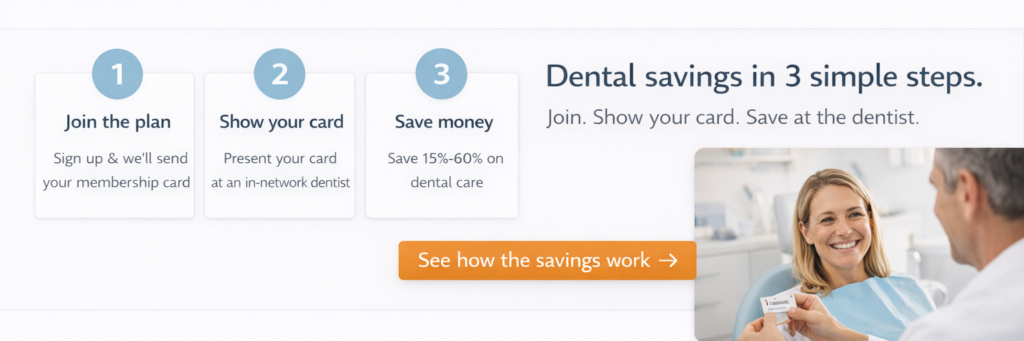
You pay a low annual or monthly fee, and in return, you get access to a network of dentists who agree to charge reduced rates — often 10% to 60% less than standard prices.
Why so many people like them:
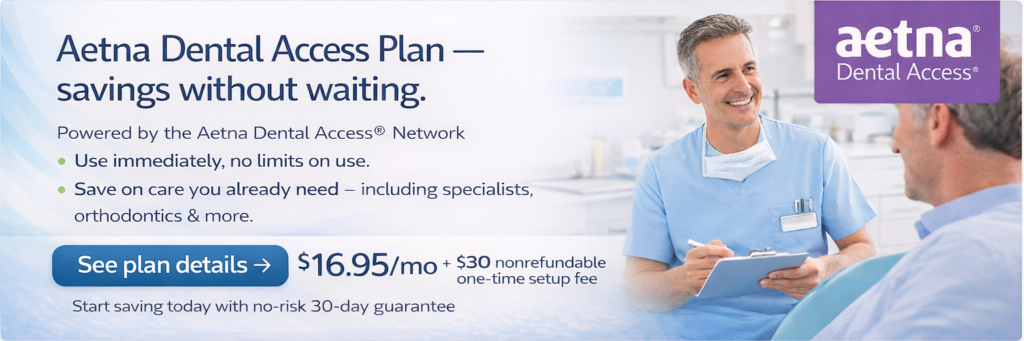
- No waiting periods
You can usually use the plan almost immediately. That’s a huge relief if you need care now. 😌 - No annual caps
There’s no maximum on how much you can save in a year. - No deductibles or claim forms
You pay the discounted rate directly at the dentist’s office. Simple and transparent. - Cosmetic services often included
Whitening, veneers, and other cosmetic treatments are frequently discounted — something insurance rarely offers.
If you’re curious about how this works step by step, this guide on How Do 1Dental Plans Work? explains it clearly and visually. It’s especially helpful if this is your first time hearing about discount plans.
Traditional Dental Insurance: The Familiar Choice
Dental insurance is what most people already know. You pay a monthly premium, and the insurer covers a portion of your care.
Coverage usually follows the 100–80–50 structure:
- 100% for preventive care
- 80% for basic procedures
- 50% for major treatments
But there are details that often catch people off guard 😬:
- Deductibles — what you pay before coverage kicks in
- Waiting periods — especially for major work (often 6–12 months)
- Annual maximums — commonly $1,000–$2,000 per year
That annual cap is where many people feel stuck. Once you hit it, you’re paying full price for the rest of the year.
Insurance can still be a great option — particularly if your employer covers most of the premium. But if you’re paying out-of-pocket or need significant work, the limitations matter.
Table: Dental Discount Plan vs. Dental Insurance
Seeing the differences side by side can make this decision feel less overwhelming. 😊
| Feature | Dental Discount Plan | Traditional Dental Insurance |
|---|---|---|
| How it Works | Membership with instant discounted rates | Monthly premiums + partial coverage |
| Typical Annual Cost | Lower ($80–$200) | Higher ($300–$700+) |
| Waiting Periods | Usually none | Often 6–12 months |
| Annual Maximum | None | Yes ($1,000–$2,000) |
| Paperwork | None | Claims required |
| Cosmetic Coverage | Often discounted | Rarely covered |
| Best For | Immediate needs, seniors, self-employed | Employer plans, preventive care |
For a deeper breakdown of real-life scenarios, this comparison of dental discount plan vs. insurance can help you decide which approach fits your situation best.
Community & Alternative Options
If your budget is tight, you still have options. And it’s okay to explore them without feeling embarrassed. 💙
- Dental schools
Treatment is performed by students under supervision. Costs are often significantly lower, but appointments take longer. - Community health centers
Many offer sliding-scale fees based on income. - Direct-to-consumer solutions
For specific needs, some treatments can now be handled at home. For example, if you’ve been diagnosed with teeth grinding, services like ihomedental allow you to order custom dental devices using a mail-in impression kit — often at a much lower cost than in-office options.
These alternatives aren’t shortcuts. They’re simply different paths through the system.
Practical Steps to Take Before and During Your Visit 💬
Knowledge helps — but communication saves money too.
Being informed and proactive doesn’t make you “difficult.” It makes you smart. And most dental offices expect these questions.
✅ Your 5-Step Dental Savings Checklist
Use this checklist before and during appointments to feel more in control:
- Ask for a written treatment plan
Request procedure codes and itemized costs. This is completely normal. - Ask about alternatives
Many dental issues have more than one solution. Ask what options exist. - Get a second opinion for major work
Especially when thousands of dollars are involved. - Discuss payment options upfront
Ask about payment plans or financing before treatment starts. - Confirm network participation
Always verify your dentist accepts your plan — never assume.
That last step alone can prevent massive surprise bills. 😬
Finding an Affordable Dentist Who Fits Your Plan
A plan is only useful if you can actually use it.
Most providers offer simple search tools that let you find participating dentists by ZIP code. Many people start by checking which dentists in their area accept a discount plan — an easy, low-pressure way to explore options. 💙
✨ Pro Insight from Our Team ✨
Understanding Dental CodesThose codes on your treatment plan aren’t random. They’re universal CDT codes used nationwide.
Why that matters? You can compare prices across offices using the same codes — ensuring you’re comparing the exact same procedure. That’s a quiet but powerful way to save money. 😊
How to Save Money on Dental Work Without Sacrificing Quality
Wanting affordable care doesn’t mean you should accept poor care.
Be cautious of:
- Deals that seem unrealistically cheap
- High-pressure treatment decisions
- Providers who won’t explain options clearly
Your goal isn’t the lowest price — it’s good care at a fair price.
And remember: if you experience severe pain, swelling, or signs of infection, seek professional care immediately. Cost-saving strategies should never delay urgent treatment. ❤️
Your Path to Affordable Dental Health Starts Now 💙
Dental costs can feel intimidating. But they don’t have to control your decisions — or your peace of mind.
Saving money on dental work isn’t about a single trick. It’s about understanding the system, knowing your options, and asking the right questions with confidence.
You deserve care that fits both your health and your budget. And now, you have a clearer map to get there. 😊🦷
Medical Disclaimer: Content on DentalSavings.cloud is for educational purposes only and not a substitute for examination or diagnosis by a licensed dentist. If you experience pain, swelling, or urgent dental symptoms, seek professional care immediately.
Affiliate Disclosure: DentalSavings.cloud participates in affiliate programs (including discount plan partners and other trusted partners). When you buy through our links, we may earn a small commission — at no extra cost to you. These partnerships help keep our guides accurate, independent, and free for readers.
© 2026 DentalSavings.cloud | All rights reserved.